Living in a small apartment does not mean your home has to feel tight, crowded, or uncomfortable. With the right design choices, even a compact apartment can feel open, bright, stylish, and easy to live in. The secret is not always having more space, but using the space you already have more wisely. From smart furniture placement to better lighting, storage, color choices, and layout planning, small changes can make a big difference. This guide will show you practical small apartment design ideas that help every room feel bigger, cleaner, and more comfortable.
Why Small Apartments Often Feel Crowded
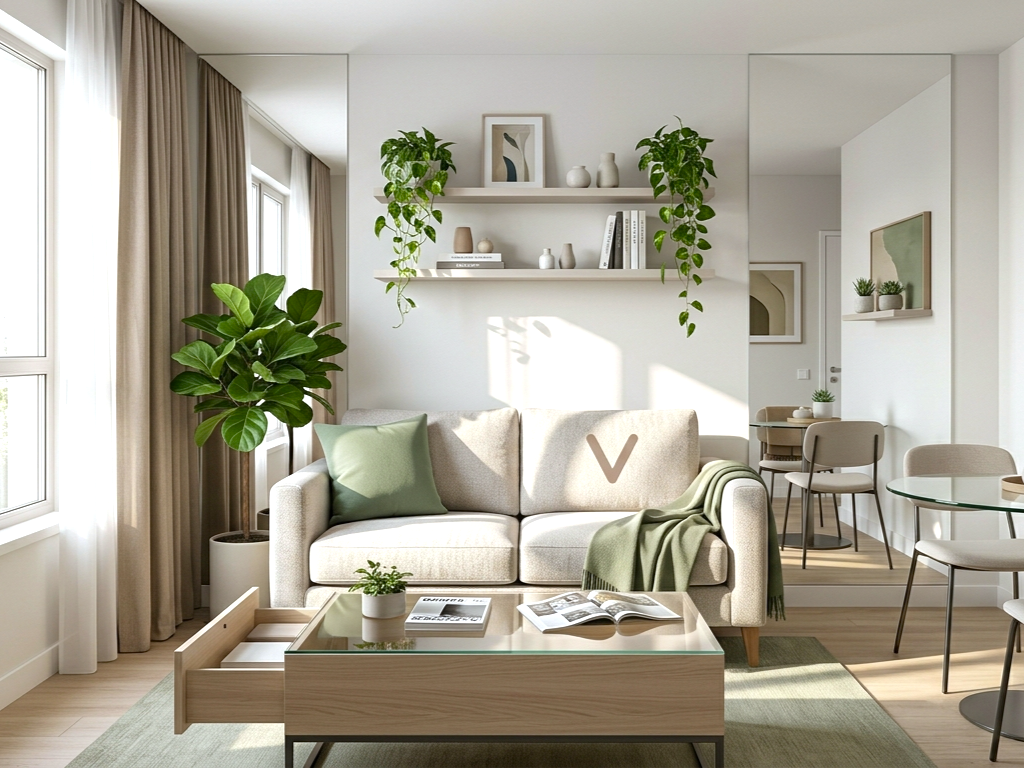
Small apartments usually feel crowded because every design decision has a stronger visual impact. In a large home, one oversized sofa or messy corner may not affect the whole room. But in a small apartment, too much furniture, poor layout, or clutter can quickly make the entire space feel heavy.
One common reason is limited floor space. When the floor is filled with furniture, boxes, shoes, baskets, and random items, the apartment feels smaller than it really is. Clear floor space gives the eye room to move, which makes the room feel more open.
Another issue is poor furniture placement. Blocking windows, walkways, or door openings can make the apartment feel tight. Even beautiful furniture can look wrong if it is too large or placed in the wrong position.
Visual clutter is also a big problem. Too many decorations, different colors, open shelves full of items, and crowded countertops can make a small room feel busy.
| Problem | Why It Makes Space Feel Smaller | Better Solution |
|---|---|---|
| Oversized furniture | Takes up too much floor space | Choose slim, compact furniture |
| Dark corners | Makes rooms feel closed in | Add layered lighting |
| Too many decorations | Creates visual clutter | Use fewer, larger decor pieces |
| Blocked windows | Reduces natural light | Keep windows open and clear |
A small apartment feels bigger when the layout is simple, light flows easily, and every item has a clear purpose.
Start With a Smart Small Apartment Layout
Before buying furniture or decorating, start with the layout. A smart layout is the foundation of good small apartment design. If the layout is wrong, even expensive furniture and beautiful decor will not make the space feel comfortable.
The first rule is to create clear walking paths. You should be able to move from the entryway to the living area, kitchen, bedroom, and bathroom without constantly turning sideways or walking around furniture. When movement feels easy, the apartment feels larger.
Next, avoid blocking windows and doors. Natural light is one of the most powerful tools for making a small apartment feel bigger. If a sofa, shelf, or wardrobe blocks a window, the whole room can feel darker and smaller.
A small apartment also works better when you create zones. Even if you live in a studio apartment, you can separate areas for sleeping, relaxing, eating, and working. You do not always need walls. Rugs, lighting, furniture placement, or open shelves can help define each area.
Smart layout tips:
- Place larger furniture against walls when possible.
- Keep the center of the room open.
- Use rugs to define zones.
- Avoid placing furniture in front of windows.
- Choose furniture that fits the room size.
A good layout should feel natural. When every area has a clear purpose and the room is easy to move through, your apartment will instantly feel more open and organized.
Choose Light Colors to Open Up the Space
Color plays a major role in how big or small an apartment feels. Light colors reflect more light, which helps walls, ceilings, and rooms feel more open. Dark colors can look stylish, but when used too heavily in a small apartment, they may make the space feel smaller or more enclosed.
For small apartments, soft and neutral colors are usually the safest choice. White, warm beige, soft gray, cream, light taupe, pale green, and light blue can make a room feel calm and spacious. These colors also create a clean background, allowing furniture and decor to stand out without overwhelming the room.
This does not mean your apartment must be plain or boring. You can still use accent colors through pillows, rugs, artwork, lamps, curtains, or one feature wall. The key is balance. A light base with small color accents often works better than using strong colors everywhere.
| Area | Best Color Choice | Why It Works |
|---|---|---|
| Walls | White, cream, soft gray | Makes rooms brighter |
| Ceiling | White or off-white | Creates height |
| Furniture | Beige, light wood, soft neutrals | Keeps the space airy |
| Accents | Green, navy, terracotta, black | Adds personality |
For a bigger-looking apartment, try to keep the color palette simple. Too many colors can create visual noise. A good rule is to choose one main color, one secondary color, and one accent color. This keeps the apartment stylish, calm, and visually spacious.
Use Mirrors to Create the Illusion of Space
Mirrors are one of the easiest and most affordable ways to make a small apartment feel bigger. A mirror reflects light, adds depth, and creates the illusion that a room continues beyond its actual walls. This simple design trick works especially well in living rooms, bedrooms, entryways, and dining areas.
The best place to hang a mirror is across from or near a window. This allows the mirror to reflect natural light into the room, making the space feel brighter. A large mirror can also make a narrow room feel wider, especially when placed on a main wall.
In small apartments, one large mirror often works better than many small mirrors. Too many small mirrors can make the wall feel busy, while one large mirror creates a clean and elegant effect.
Best mirror ideas for small apartments:
- A large floor mirror beside the sofa
- A round mirror above a console table
- A mirror across from a window
- Mirrored closet doors in the bedroom
- A bathroom mirror with built-in storage
- A hallway mirror to brighten narrow spaces
Mirrors are also useful in entryways. A small apartment entryway can feel cramped, but a mirror adds brightness and function. It gives you a place to check your outfit while also making the entrance feel more open.
For the best result, choose mirrors with simple frames. Thin black, brass, wood, or frameless mirrors usually work well. Avoid very heavy frames if the space is already small, because they can make the wall feel crowded.
Maximize Natural Light
Natural light can completely change the feeling of a small apartment. A bright room feels larger, cleaner, and more welcoming. Even if your apartment is small, good natural light can make it feel open and fresh.
Start by keeping your windows as clear as possible. Avoid placing tall furniture, bulky shelves, or large plants directly in front of windows. These items block sunlight and make the room feel darker. Instead, place low furniture near windows so light can still enter the space.
Curtains also matter. Heavy, dark curtains can make a small room feel closed. Sheer curtains, light linen curtains, or blinds are better choices because they allow light to pass through while still giving privacy. Hanging curtains higher and wider than the window can also make the room feel taller and more elegant.
Natural light design tips:
- Use sheer or light-colored curtains.
- Keep windows clean and uncovered.
- Place mirrors near windows.
- Avoid dark furniture near window areas.
- Use light wall colors to reflect sunlight.
- Trim large indoor plants if they block light.
If your apartment does not get much natural light, you can still improve the feeling by using reflective surfaces. Glass tables, light-colored furniture, mirrors, glossy tiles, and metallic accents can help bounce available light around the room.
A small apartment does not need huge windows to feel bright. It needs smart light management. When you protect natural light and help it move through the space, every room will feel bigger.
Pick Multi-Functional Furniture
Multi-functional furniture is one of the best investments for small apartment living. When one piece of furniture can serve two or three purposes, you save space and reduce clutter. This is especially important in apartments where the living room may also function as a dining area, home office, guest room, or storage zone.
A sofa bed is a great option if you often have guests. During the day, it works as seating. At night, it becomes a bed. A storage ottoman is another smart piece because it can be used as a footrest, coffee table, extra seat, and hidden storage.
Beds with built-in drawers are perfect for small bedrooms. They give you extra storage without needing another dresser or cabinet. Foldable dining tables are also useful because they can be opened when needed and tucked away when not in use.
| Furniture Type | Function 1 | Function 2 |
|---|---|---|
| Sofa bed | Seating | Guest bed |
| Storage ottoman | Footrest | Hidden storage |
| Foldable table | Dining table | Workspace |
| Bed with drawers | Sleeping | Clothing storage |
| Nesting tables | Side tables | Extra surfaces |
When choosing multi-functional furniture, avoid pieces that are too bulky. The goal is to save space, not fill the room with heavy furniture. Look for clean lines, slim legs, and simple designs.
Multi-functional furniture is especially useful for renters because it allows you to improve your space without permanent renovation. It helps your apartment stay flexible, organized, and comfortable.
Use Vertical Space for Storage and Decor
In a small apartment, floor space is limited, but wall space is often underused. Vertical storage helps you use the height of your room instead of only the floor. This makes the apartment more functional while keeping the room open.
Tall shelves are a great solution for books, baskets, plants, and decor. Instead of using a wide cabinet that takes up too much floor space, choose a tall, narrow shelving unit. It gives you storage without making the room feel crowded.
Floating shelves are another excellent option. They are useful in living rooms, kitchens, bathrooms, bedrooms, and entryways. You can use them for decorative items, small plants, books, jars, or daily essentials.
Vertical storage ideas:
- Tall bookcases
- Floating shelves
- Wall-mounted cabinets
- Pegboards
- Hooks behind doors
- Over-the-toilet bathroom shelves
- Tall wardrobes
- Wall-mounted spice racks
- Vertical plant stands
Vertical storage is also helpful in the kitchen. Small apartment kitchens often have limited cabinet space. Adding wall rails, magnetic knife strips, hanging racks, or open shelves can free up counters and cabinets.
The key is not to overcrowd your walls. Too many shelves packed with items can create visual clutter. Use vertical storage with balance. Mix closed storage with open display so the room feels organized, not busy.
When you use your walls wisely, your apartment becomes more efficient and spacious without needing more square footage.
Keep the Floor Clear
A clear floor makes a small apartment feel instantly bigger. When too many items sit on the floor, the room feels crowded and difficult to move through. Clear floors create visual breathing space and make cleaning easier.
One way to keep the floor clear is to choose wall-mounted furniture. Floating desks, wall-mounted TV units, floating shelves, and wall hooks all help reduce the number of items touching the floor. This creates a lighter look and makes the apartment feel more open.
Furniture with slim legs is also useful. Sofas, chairs, and tables with exposed legs allow you to see more floor underneath, which creates the illusion of extra space. In contrast, heavy furniture that sits directly on the floor can make a room feel blocky.
Ways to keep floors open:
- Use floating shelves instead of floor cabinets.
- Choose a wall-mounted desk.
- Store items under the bed.
- Use hooks instead of standing coat racks.
- Avoid too many small side tables.
- Choose furniture with exposed legs.
- Use baskets inside cabinets, not around the floor.
Under-bed storage is especially helpful in small apartments. You can store seasonal clothes, shoes, blankets, or extra bedding without needing more cabinets.
A clear floor does not mean the apartment must be empty. It means the floor should not be used as random storage. When everything has a place, your rooms look cleaner, bigger, and more peaceful.
Create Separate Zones Without Walls
Many small apartments, especially studio apartments, need one room to serve multiple purposes. The same area may be used for sleeping, relaxing, working, eating, and entertaining. Creating zones helps the apartment feel organized without adding walls.
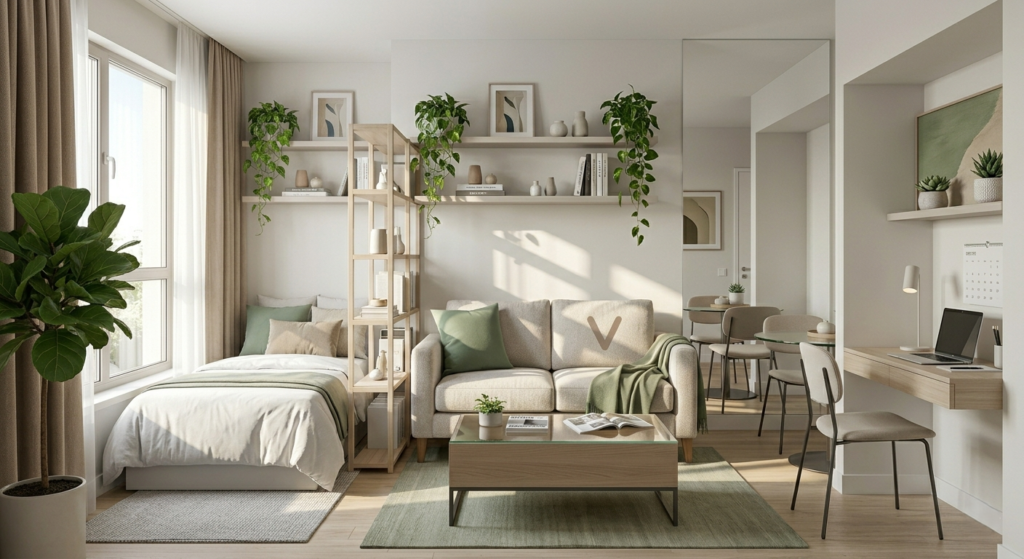
Rugs are one of the easiest ways to define zones. A rug under the sofa can mark the living area, while a smaller rug near a table can define a dining corner. This creates visual separation without closing the space.
Open shelving can also act as a room divider. Unlike solid walls, open shelves allow light to pass through, so the room still feels bright. You can use shelves to separate a bed from a living area or create a small office corner.
| Zoning Method | Best For | Benefit |
|---|---|---|
| Rugs | Living and dining areas | Adds visual separation |
| Open shelves | Studio apartments | Divides space without blocking light |
| Curtains | Sleeping areas | Adds privacy |
| Lighting | Work or reading corners | Defines function |
| Furniture placement | Open layouts | Organizes movement |
Curtains or folding screens can be useful when you need privacy, especially around a bed. Choose light fabrics or slim screens so the space does not feel too closed.
Good zoning makes a small apartment feel intentional. Instead of one crowded room, your home feels like a complete living space with clear areas for different daily activities.
Choose the Right Furniture Scale
Furniture scale is extremely important in small apartment design. Even if a piece is beautiful, it can ruin the room if it is too large. Oversized sofas, bulky beds, wide dining tables, and heavy cabinets can make a small apartment feel cramped.
The best furniture for small apartments is proportional. This means each piece fits the size of the room and leaves enough space for movement. A compact sofa may work better than a large sectional. A round dining table may feel lighter than a rectangular one. A slim desk may be more practical than a full office table.
Look for furniture with clean lines and exposed legs. These designs feel visually lighter. Furniture raised off the floor allows more floor space to show, which helps the room feel larger.
Good furniture choices for small apartments:
- Loveseats instead of oversized sofas
- Round dining tables
- Slim console tables
- Armless chairs
- Nesting tables
- Platform beds with storage
- Compact desks
- Narrow bookshelves
Avoid buying furniture only because it looks good online. Always measure your apartment first. Measure doorways, walls, walking paths, and existing furniture. Leave enough space around each piece so the room does not feel packed.
A simple rule is this: your furniture should support your lifestyle, not dominate your apartment. When the scale is right, your apartment feels balanced, comfortable, and much bigger.
Declutter and Organize Every Room
Decluttering is one of the most powerful ways to make a small apartment feel bigger. You can have the best furniture, colors, and lighting, but if every surface is full of items, the space will still feel crowded.
Start by removing things you do not use, need, or love. Small apartments do not have enough space for “maybe someday” items. Keep what supports your daily life and remove what only takes up space.
Organize by room function. In the kitchen, keep cooking items near the cooking area. In the bedroom, keep clothes and personal items in drawers, baskets, or closets. In the living room, store remotes, chargers, books, and blankets in hidden storage.
Simple decluttering method:
- Choose one small area.
- Remove everything from that area.
- Keep only useful or meaningful items.
- Group similar items together.
- Store items in baskets, bins, drawers, or cabinets.
- Keep surfaces as clear as possible.
| Area | Common Clutter | Better Storage |
|---|---|---|
| Entryway | Shoes, bags, keys | Shoe cabinet and wall hooks |
| Kitchen | Small appliances | Cabinets or shelves |
| Living room | Remotes, cables | Storage basket or drawer |
| Bedroom | Clothes | Under-bed bins or closet organizers |
Decluttering should not be a one-time task. Small apartments need regular maintenance. Spend a few minutes each day returning items to their proper place. This habit keeps your home feeling fresh, open, and easy to live in.
Small Apartment Living Room Ideas
The living room is often the main area of a small apartment, so it needs to be comfortable, stylish, and practical. It may also serve as a dining space, office, or guest area. Good design helps it perform multiple roles without feeling crowded.
Start with the sofa. Choose a compact sofa, loveseat, or slim sectional depending on your layout. Avoid oversized sofas that take over the whole room. A sofa with raised legs can help the room feel lighter.
Instead of a large coffee table, consider a small round table, nesting tables, or a storage ottoman. These options provide function without blocking movement. If your living room is very small, you can even use side tables instead of a central coffee table.
Mounting the TV on the wall can save floor space. A floating TV console also looks lighter than a bulky media cabinet. Use baskets or closed cabinets to hide cables, remotes, and electronics.
Small living room design tips:
- Use a light-colored rug to define the space.
- Choose furniture with slim legs.
- Mount the TV on the wall.
- Add a mirror to reflect light.
- Use vertical shelves for decor and storage.
- Keep the coffee table small.
- Use layered lighting instead of one ceiling light.
Lighting is especially important. A mix of floor lamps, wall sconces, and table lamps makes the room feel warm and spacious. A well-designed small living room should feel cozy, not crowded.
Small Apartment Bedroom Ideas
A small apartment bedroom should feel calm, restful, and uncluttered. Since bedrooms can quickly become crowded with clothes, furniture, and personal items, smart storage and simple design are essential.
The bed is usually the largest item in the bedroom, so placement matters. If possible, place the bed against the longest wall and leave walking space on at least one side. In very small bedrooms, placing the bed in a corner can create more usable floor space.
Choose a bed with built-in storage or use under-bed boxes. This space is perfect for extra blankets, seasonal clothes, shoes, or luggage. If there is no room for a dresser, use a tall wardrobe, wall hooks, or closet organizers.
Nightstands can also be replaced with smaller alternatives. Floating shelves, wall-mounted bedside tables, or narrow stools can work well in compact bedrooms.
Small bedroom ideas:
- Use light, calming colors.
- Choose bedding with simple patterns.
- Add wall-mounted lamps instead of table lamps.
- Use mirrors to brighten the room.
- Keep bedside surfaces clear.
- Use vertical storage.
- Choose sliding closet doors if possible.
Avoid too many decorations in a small bedroom. A few meaningful pieces, soft lighting, and clean bedding are enough to create a peaceful atmosphere.
The goal is to make the bedroom feel like a retreat. With fewer items, better storage, and a soft color palette, even a tiny bedroom can feel comfortable and spacious.
Small Apartment Kitchen Ideas
Small apartment kitchens need to be highly functional. Because counter space and cabinet storage are often limited, every item should have a clear place. A well-organized kitchen feels bigger and makes cooking easier.
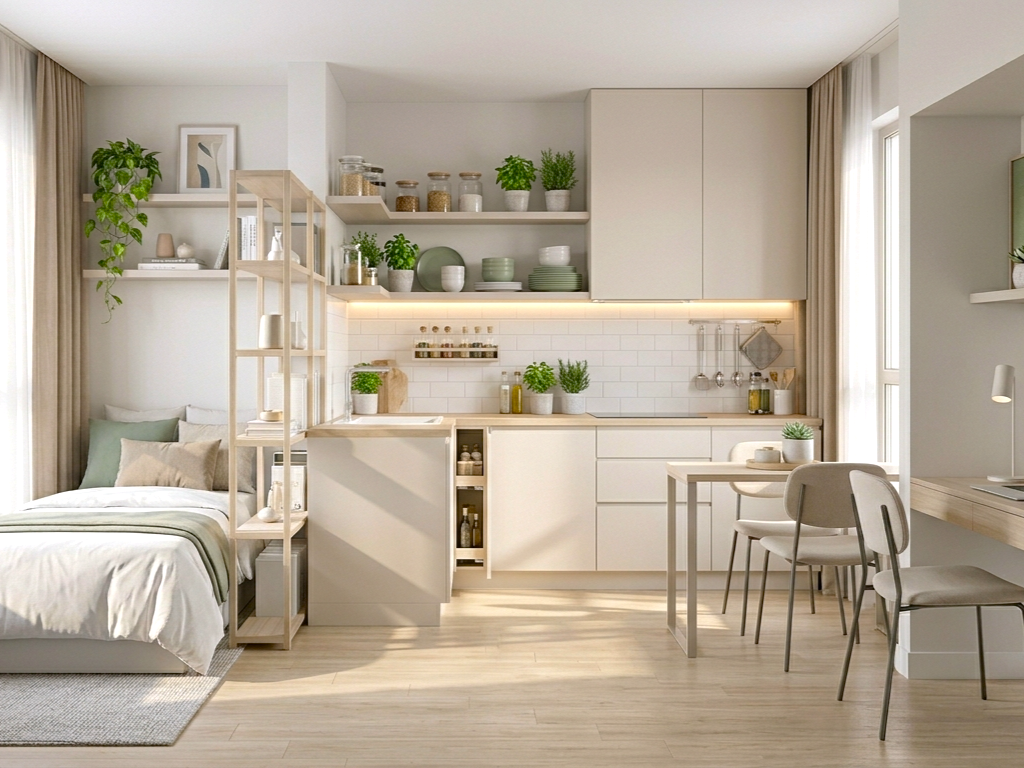
Start by clearing the countertops. Keep only the items you use every day, such as a coffee maker, kettle, or cutting board. Store rarely used appliances inside cabinets or on higher shelves. Clear counters instantly make a kitchen feel larger.
Use cabinet organizers to improve storage. Pull-out baskets, shelf risers, drawer dividers, and lazy Susans can help you use every inch of cabinet space. Wall-mounted racks are also useful for utensils, spices, mugs, or pots.
Open shelving can make a small kitchen feel airy, but it must be organized. Use matching jars, simple dishes, and limited decor. Too many items on open shelves can create clutter.
| Kitchen Area | Space-Saving Idea |
|---|---|
| Cabinets | Add shelf risers and pull-out baskets |
| Walls | Use rails, hooks, and spice racks |
| Countertops | Keep only daily-use items |
| Dining corner | Use foldable or wall-mounted table |
| Sink area | Use over-sink drying rack |
For small dining solutions, consider a narrow breakfast bar, fold-down wall table, or round table with slim chairs. Good lighting under cabinets can also make the kitchen feel brighter and more open.
A small kitchen works best when it is simple, clean, and organized.
Small Apartment Bathroom Ideas
Small apartment bathrooms can feel tight, but smart design can make them feel cleaner and more spacious. The key is to reduce clutter, use light colors, and maximize wall storage.
A floating vanity is a great choice because it keeps the floor visible, making the room feel larger. If you cannot change the vanity, use baskets or organizers inside the cabinet to keep items hidden.
Mirrors are very important in small bathrooms. A large mirror above the sink reflects light and adds depth. A mirror cabinet is even better because it combines storage and function.
Wall-mounted shelves can provide storage for towels, skincare, and bathroom essentials. The space above the toilet is often underused and can be turned into practical storage with shelves or a slim cabinet.
Small bathroom design tips:
- Use light colors on walls and tiles.
- Choose a large mirror.
- Use glass shower screens if possible.
- Keep toiletries hidden.
- Add shelves above the toilet.
- Use hooks instead of towel racks.
- Choose slim storage cabinets.
A shower curtain can make the bathroom feel smaller if it is dark or heavy. A clear glass screen or light-colored shower curtain works better. Also, avoid placing too many products around the sink or bathtub.
When the bathroom is bright, organized, and simple, it feels much more open and relaxing.
Small Apartment Entryway Ideas
The entryway is the first thing you see when you enter your apartment, so it should feel clean and welcoming. In small apartments, entryways are often narrow or almost nonexistent, but even a tiny entrance can be functional with the right design.
Start with shoe storage. Shoes scattered on the floor make the entryway look messy and crowded. A slim shoe cabinet, vertical rack, or bench with storage can keep the area organized. If space is extremely limited, use a wall-mounted shoe rack or under-bench baskets.
Wall hooks are perfect for bags, coats, hats, and keys. They save floor space and keep everyday items easy to reach. A small tray or wall-mounted organizer can hold keys, mail, and sunglasses.
A mirror is also a great entryway addition. It reflects light, makes the area feel larger, and gives you a useful place for a final check before leaving home.
Small entryway essentials:
- Slim shoe cabinet
- Wall hooks
- Small mirror
- Narrow console table
- Key tray
- Basket for bags
- Soft lighting
- Small washable rug
Avoid oversized furniture in the entryway. A narrow console table or floating shelf is usually enough. Keep the decor simple: one mirror, one small plant, or one framed artwork can make the space feel styled without clutter.
A clean entryway sets the tone for the whole apartment. When this area is organized, your home immediately feels more spacious.
Small Apartment Balcony Ideas
A small balcony can become one of the most enjoyable areas in an apartment. Even if the balcony is narrow, it can be turned into a cozy outdoor corner for relaxing, reading, drinking coffee, or growing plants.
Foldable furniture is ideal for small balconies. A folding chair and table can be used when needed and stored away when you want more space. If the balcony is very small, consider a railing table that attaches to the balcony rail.
Vertical plant stands are also useful. Instead of placing many pots on the floor, use a tall plant shelf or hanging planters. This adds greenery without taking up too much walking space.
Outdoor rugs can make the balcony feel like a real room. Choose a weather-resistant rug that fits the size of the balcony. Add cushions or a small outdoor bench for comfort.
Small balcony design ideas:
- Foldable chairs and table
- Railing table
- Vertical plant stand
- Hanging planters
- Outdoor rug
- String lights
- Small lanterns
- Compact bench with storage
Lighting can make a big difference. String lights, solar lanterns, or battery-powered lamps create a warm and cozy atmosphere at night.
Do not overload the balcony with too much furniture. Keep it simple and functional. A small balcony feels best when it has a clear purpose, whether that is relaxing, gardening, or enjoying morning coffee.
Lighting Ideas That Make Small Rooms Feel Bigger
Lighting is one of the most important design tools for small apartments. Poor lighting can make even a clean room feel dark and cramped, while good lighting can make the space feel larger, warmer, and more inviting.
Instead of relying on one ceiling light, use layered lighting. This means combining different types of lights at different heights. For example, use a ceiling light for general brightness, a floor lamp for cozy light, and a table lamp for reading.
Wall sconces are excellent for small apartments because they add light without taking up floor or table space. Under-cabinet lighting is useful in kitchens, while LED strips can brighten shelves, desks, or wardrobes.
| Lighting Type | Best Use |
|---|---|
| Ceiling light | General room lighting |
| Floor lamp | Living room corners |
| Wall sconce | Bedroom, hallway, reading area |
| Table lamp | Desk or bedside |
| Under-cabinet light | Kitchen counters |
| LED strip | Shelves and storage areas |
Warm light creates a cozy feeling, while cooler light can be useful for work areas. In most homes, warm white lighting works best for living rooms and bedrooms, while brighter neutral lighting works well in kitchens and bathrooms.
Also, try to light dark corners. A dark corner can make a room feel smaller. Adding a lamp or wall light can visually expand the space and make the apartment feel more balanced.
Common Small Apartment Design Mistakes to Avoid
Small apartment design is not only about what you add. It is also about what you avoid. Some common mistakes can make a small home feel much smaller than it really is.
One major mistake is using too much furniture. Many people try to fit a full-size home layout into a small apartment. This often leads to crowded rooms and blocked walkways. Choose fewer pieces with better function.
Another mistake is using dark colors everywhere. Dark colors can look elegant, but too much darkness in a small apartment may make the space feel closed. Use dark tones as accents instead of covering every wall or large furniture piece.
Ignoring vertical space is also common. If you only use floor cabinets and low storage, you waste valuable wall height. Tall shelves, hooks, and wall-mounted storage can make a big difference.
Mistakes to avoid:
- Buying oversized furniture
- Blocking windows with shelves or sofas
- Keeping too many small decorations
- Using only one ceiling light
- Ignoring wall storage
- Choosing furniture without storage
- Leaving clutter on countertops
- Using too many different colors and patterns
Another mistake is decorating with too many tiny items. Many small decorations can make surfaces look messy. Instead, use fewer but larger decor pieces for a cleaner look.
A small apartment should feel intentional. Every piece should have a reason. When you avoid clutter, poor lighting, and oversized furniture, your apartment will feel bigger, calmer, and easier to enjoy.
Final Thoughts
Small apartment design is all about making smart choices. You do not need a large home to create a beautiful, comfortable, and functional living space. By using light colors, mirrors, natural light, multi-functional furniture, vertical storage, and a smart layout, you can make every room feel bigger. The most important rule is to keep your space simple, organized, and purposeful. Every item should support the way you live. With the right design ideas, your small apartment can feel open, stylish, cozy, and practical at the same time. A small home can still have a big personality.