Luxury in a small apartment is not about spending a fortune. It is about creating a space that feels calm, polished, intentional, and comfortable. Even the smallest home can look refined when each design choice serves a purpose. Thoughtful lighting, cleaner layouts, elegant colors, layered textures, and a few well-chosen details can completely change how a room feels. Instead of filling the apartment with expensive items, the smarter approach is to focus on visual harmony and practical upgrades that create a high-end impression. This guide will show you how to make a small apartment look more stylish and sophisticated without overspending. With the right strategies, budget-friendly decorating can still create a luxurious, welcoming atmosphere in your home.
What Makes a Small Apartment Feel Luxurious
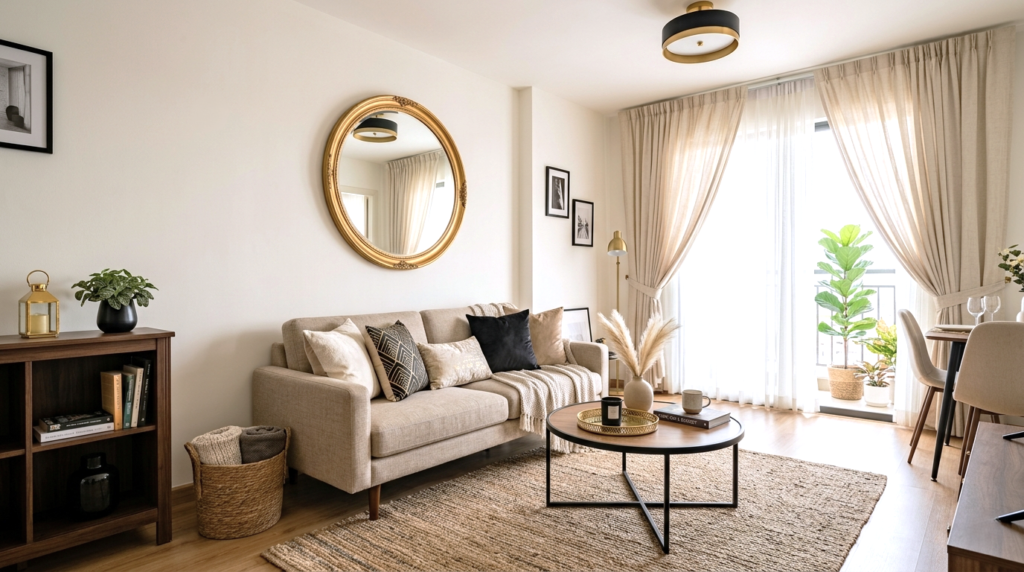
A luxurious apartment does not depend on square footage. It depends on the presentation. Small spaces feel high-end when they appear organized, well-balanced, and carefully styled. Luxury is often less about owning more and more and more about showing restraint.
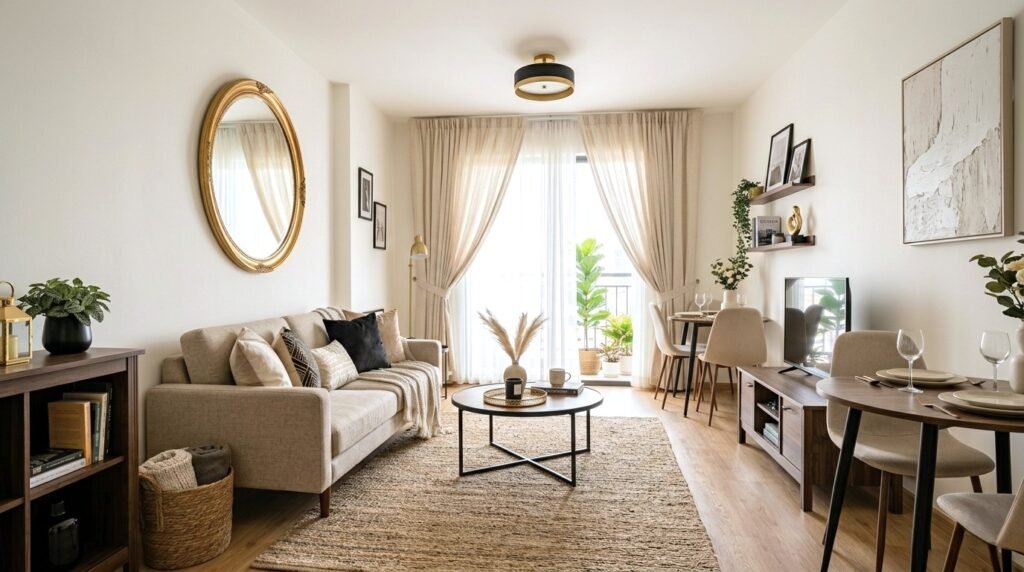
Several features usually make a small apartment feel more upscale:
- Clean visual flow: Furniture placement makes sense and does not block movement.
- Consistency: Colors, finishes, and materials work together.
- Intentional styling: Decor feels chosen, not random.
- Comfort: The space looks inviting, soft, and restful.
- Good lighting: Rooms feel warm, bright, and flattering.
Luxury vs. Expensive
| Luxury Feeling | Expensive But Not Necessarily Luxurious |
|---|---|
| Calm and uncluttered | Overdecorated and crowded |
| Coordinated materials | Mismatched statement pieces |
| Soft lighting | Harsh overhead light |
| Quality-looking basics | Trendy but cheap-looking extras |
| Thoughtful layout | Too much furniture |
A small apartment can feel luxurious when each item has breathing room. Empty space is part of the design. When every wall, shelf, and corner is full, the room starts to feel smaller and less refined.
Interior designers often repeat a simple idea: editing is as important as decorating. That means removing things can be just as powerful as buying new ones. In a small apartment, this matters even more. The luxurious look comes from order, softness, proportion, and simplicity.
Start With a Clean and Clutter-Free Foundation
Before buying any decor, the first upgrade should be decluttering. A luxurious apartment rarely looks chaotic. It feels easy to live in because surfaces are clean, storage is controlled, and the eye can rest.
Start by removing items that do not support the room’s function or style. In small apartments, visual clutter builds up quickly: extra baskets, wires, packaging, piles of laundry, too many small accessories, and furniture that does not fit the room. These details make the home feel cheaper, even if the decor itself is attractive.
Decluttering priorities
- Clear visible surfaces: coffee table, kitchen counter, side table, nightstand.
- Remove duplicate decor: keep the strongest pieces only.
- Store daily-use items neatly: trays, baskets, and drawers help.
- Edit furniture: fewer, better-fitting pieces usually look more elegant.
Quick reset checklist
- Hide chargers and cords
- Store seasonal items out of sight
- Keep only one or two decorative objects per surface
- Remove anything broken or worn out
- Create a laundry and shoe system
A clean base instantly improves the room. Even basic furniture can look better in a space that feels managed. Many people try to decorate over clutter, but the result rarely looks luxurious. The room needs structure first.
Think of decluttering as polishing the background so every good design choice stands out more clearly. Once the apartment feels lighter and cleaner, even inexpensive upgrades will have a stronger impact.
Choose a Simple and Elegant Color Palette
Color has a major effect on whether a small apartment feels budget-friendly or high-end. Luxurious interiors often use a restrained palette. That does not mean boring. It means the colors are chosen carefully and repeated consistently.
In a small apartment, too many strong colors can make the space look busy. A more elegant approach is to build the room around two or three main shades, then add subtle contrast through texture and materials.
Budget-friendly luxury color palettes
- Warm neutrals: ivory, beige, taupe, warm gray
- Soft modern: white, greige, black accents
- Earthy, elegant: sand, olive, cream, wood tones
- Cool minimal: soft gray, white, charcoal, brushed metal
A simple formula
- 60% main color: walls, large rug, sofa, bedding
- 30% secondary color: curtains, chairs, accent wall tone
- 10% accent color: black, gold, deep green, navy, or terracotta
Muted tones usually look more expensive than loud ones in small spaces. Soft shades reflect light better and help the apartment feel more open. If you like richer colors, use them in smaller amounts through pillows, art, vases, or throws instead of painting the entire room dark.
A luxurious palette also looks more polished when finishes relate to one another. For example, warm wood, cream fabric, and brass details usually feel cohesive. Cold gray, bright orange, and dark red in one small room may fight for attention.
Choosing a simple palette helps everything look intentional. It also makes future decorating easier because new items are more likely to match the existing space.
Use Lighting to Create a High-End Atmosphere
Lighting can completely change the mood of a small apartment. Even beautiful decor looks flat under harsh, cold, or poorly placed light. Luxurious spaces usually have layered lighting instead of relying on one bright ceiling fixture.
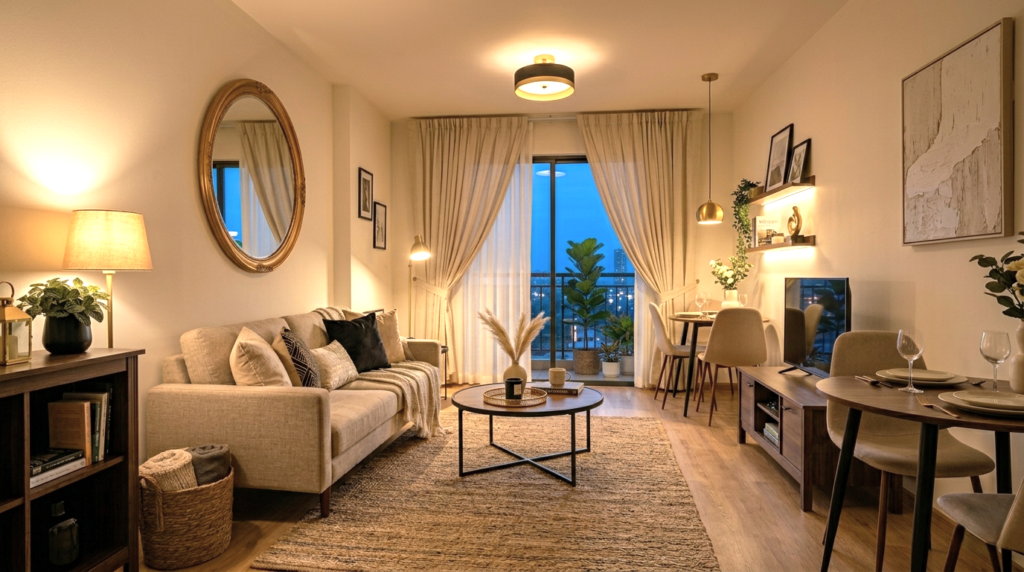
The three main layers of good lighting
- Ambient lighting: the main light source for the room
- Task lighting: practical lighting for reading, cooking, or working
- Accent lighting: softer lighting that creates a mood and highlights decor
In small apartments, a common mistake is using only one overhead light. This creates shadows, makes ceilings feel lower, and gives the room a basic look. Adding a floor lamp, table lamp, or wall sconce can make the apartment feel far more refined.
Affordable ways to upgrade lighting
- Swap bright white bulbs for soft, warm white bulbs
- Use lampshades that diffuse light gently
- Add LED strip lights under cabinets or shelves
- Place a small lamp on a console or bedside table
- Use matching bulb temperatures throughout the room
Quick comparison
| Lighting Choice | Effect on the Room |
|---|---|
| Harsh cool white overhead bulb | Feels flat and cheap |
| Warm lamp lighting | Feels soft and welcoming |
| One central light only | Feels unfinished |
| Multiple light sources | Feels layered and intentional |
Light should flatter both the room and the materials inside it. Soft lighting brings out texture, fabric, wood grain, and metallic finishes in a more elegant way. Even a budget apartment feels richer when the lighting feels warm and controlled.
If there is one affordable change that often gives instant results, it is better lighting.
Add Mirrors to Reflect Light and Expand the Space
Mirrors are one of the oldest small-space design tricks, but they work because they do several jobs at once. They reflect light, visually expand a room, and add a decorative element without taking up much physical space.
A well-placed mirror can make a small apartment feel brighter and more open. It can also create the polished, hotel-like feeling that many people associate with luxury. The key is placement. A mirror should reflect something attractive, such as natural light, a lamp, greenery, or a styled corner.
Best places for mirrors
- Across from or near a window
- Above a console table
- In a narrow entryway
- Leaning vertically in a bedroom corner
- Behind a dining table to bounce light
Mirror styles that look more upscale
- Thin black frame
- Brushed gold or brass frame
- Arched shape
- Large frameless mirror
- Vintage-inspired mirror with simple detailing
A small mirror used in the wrong place can feel random. A larger mirror usually has more impact and looks more intentional. One strong mirror often works better than several tiny ones scattered around the apartment.
Placement tips
- Do not reflect clutter
- Avoid placing a mirror where it reflects a blank, unattractive wall
- Use scale wisely; oversized mirrors can make the room feel grander
Mirrors are especially useful in apartments with limited natural light. By reflecting both daylight and lamps, they increase brightness without requiring expensive renovation. In that sense, they are both decorative and practical. When chosen carefully, mirrors can make a modest apartment feel elegant and far more spacious.
Upgrade Soft Furnishings for a Richer Look
Soft furnishings are often the quickest way to make a small apartment feel more expensive. Curtains, throw pillows, bedding, rugs, and blankets add comfort and visual depth. When these pieces look intentional and well-coordinated, the apartment immediately feels more polished.
Luxury interiors often rely on layering, and soft furnishings are the easiest place to do that on a budget. A plain sofa can look much better with two structured cushions, one textured throw, and a nearby rug that anchors the room.
Small changes with big impact
- Replace flat pillows with fuller inserts
- Use larger cushions instead of many tiny ones
- Add a throw blanket in linen, knit, or velvet-look fabric
- Choose bedding that looks crisp and simple
- Use a rug large enough to ground the furniture
Fabrics that often look high-end
| Fabric Look | Why It Feels Luxurious |
|---|---|
| Linen-look cotton | Relaxed and elegant |
| Velvet or velvet-look | Rich texture |
| Chunky knit | Cozy and layered |
| Woven neutral rugs | Warm and sophisticated |
| Crisp white bedding | Hotel-like feel |
Try to avoid overly shiny, wrinkled, or thin fabrics when possible. They can make the room feel less refined. Instead, choose pieces with weight, texture, and soft color variation.
A common mistake is buying too many small decorative pieces instead of upgrading the basics. One better rug or nicer curtain panel often does more for the room than five small trendy items.
Soft furnishings help create the emotional side of luxury. They make the apartment feel not only stylish, but also restful and comfortable.
Pick Affordable Furniture With a Premium Style
Luxury is not about owning designer furniture in every room. It is about choosing pieces that look balanced, practical, and visually calm. In a small apartment, furniture should fit the scale of the space and avoid making the room feel crowded.
Look for affordable furniture that has simple lines, clean proportions, and versatile finishes. Furniture with slim legs, subtle curves, matte finishes, and neutral upholstery often looks more refined than bulky, heavily decorated pieces.
What to look for
- Raised-leg sofas and chairs that show more floor
- Coffee tables with clean shapes
- Nightstands or side tables with minimal hardware
- Upholstered headboards in neutral tones
- Dining chairs with slim silhouettes
What to avoid
- Oversized sectionals in tiny living rooms
- Furniture with too many fake decorative details
- Very glossy finishes that scratch easily
- Pieces that are too short, too low, or too bulky for the room
Premium-looking features on a budget
| Feature | Why It Helps |
|---|---|
| Simple silhouette | Timeless and elegant |
| Neutral upholstery | Easy to style |
| Wood or matte finish | Feels calmer than glossy plastic |
| Visible legs | Creates a lighter feel |
| Functional storage | Reduces clutter |
It is also worth mixing furniture rather than buying matching sets. Matching everything can make the room feel less natural. A luxurious space often looks layered over time, not purchased all at once.
Even secondhand pieces can look upscale if they have good shape and are styled well. The smartest budget approach is to buy fewer furniture items, but choose the best-looking and best-fitting ones you can.
Use Curtains to Make Ceilings Look Higher
Curtains do much more than cover windows. In a small apartment, they can shape the proportions of the room and make ceilings appear taller. When installed correctly, curtains create vertical emphasis, which gives the apartment a more elegant and spacious feeling.
One of the easiest tricks is to hang curtains higher and wider than the window frame. This makes the window seem larger than it really is and helps the room feel more generous.
Ideal curtain strategy
- Mount the rod closer to the ceiling
- Extend the rod wider than the window
- Use longer curtains that nearly touch the floor
- Choose simple, full panels instead of short, narrow ones
Best curtain styles for a luxurious look
- Soft white or cream curtains
- Linen-look fabrics
- Neutral drapes with a clean fall
- Blackout curtains layered behind sheers
- Ceiling-height curtains for dramatic effect
Curtain mistakes to avoid
- Hanging curtains directly on the window frame
- Using curtains that are too short
- Choosing overly busy patterns in a small room
- Using thin, limp panels that do not hang well
Curtains add softness, privacy, and architectural polish. They also help frame natural light, which is especially important in smaller spaces. A window without curtains can sometimes feel unfinished unless the apartment has a very modern minimal style.
A luxurious room often has fabric that moves the eye upward. That is why curtain placement matters so much. Even affordable curtains can look elegant when they are long, full, and properly installed.
Create a Focal Point in Each Room
Every room benefits from a focal point. It gives the eye somewhere to land and makes the space feel intentional. Without one, a small apartment can feel visually scattered, even if the furniture and decor are attractive.
A focal point does not have to be expensive. It can be a piece of art, a styled bed, a statement mirror, a well-arranged sofa wall, or even a bold lamp. The goal is to create one standout area that anchors the room.
Examples of focal points by room
- Living room: artwork above the sofa, a mirror, or a coffee table arrangement
- Bedroom: headboard wall, layered bedding, or dramatic curtains
- Dining area: pendant light, centerpiece, or gallery wall
- Entryway: console table with mirror and lamp
Why focal points feel luxurious
- They reduce visual confusion
- They make the room look designed
- They add structure to the layout
- They help smaller spaces feel more composed
Simple focal point formula
- Choose one main feature
- Support it with two or three smaller elements
- Avoid competing statement pieces nearby
For example, if your bed is the focal point, use elegant bedding, matching bedside lamps, and maybe one large artwork above it. Do not add five bright colors and six unrelated accessories around the same area.
Luxury often comes from clarity. A room that knows what its main moment is will always feel more refined than a room where everything demands attention.
Decorate With Texture Instead of Too Many Items
A common decorating mistake in small apartments is trying to create style through quantity. But a luxurious room usually relies more on texture than on too many decorative objects. Texture adds richness without visual clutter.
In practical terms, this means mixing materials and surfaces in a thoughtful way. A room with woven fabric, soft curtains, matte ceramics, wood, metal, and natural fibers can feel far more sophisticated than a room filled with many small decorations.
Ways to add texture
- Layer a woven rug under a soft sofa
- Add linen or cotton cushions
- Use ceramic vases instead of shiny plastic decor
- Mix wood with glass or metal accents
- Include one knit throw or bouclé-style cushion
Texture combinations that work well
| Main Material | Pair With |
|---|---|
| Wood | Linen, metal, woven baskets |
| Glass | Stone-look decor, soft fabric |
| Metal | Warm wood, matte ceramics |
| Cotton | Velvet-look accents or knit throws |
Texture helps create depth. This is especially important when using a neutral palette, because the room stays interesting even without strong colors. In luxury design, subtle contrast often works better than loud contrast.
Instead of placing ten accessories on a shelf, try three items with different finishes: a ceramic vase, a stack of books, and a small framed print. The result feels calmer and more considered.
When decorating a small apartment, the question should not always be, “What else can I add?” Sometimes the better question is, “How can I make what I already have feel richer?”
Make Small Spaces Look Expensive With Wall Art
Wall art can instantly elevate a small apartment when chosen well. It gives character, breaks up blank walls, and can create the kind of styled, editorial feeling often seen in luxury interiors. The key is to choose art that supports the room instead of overwhelming it.
Good art choices for a budget luxury look
- Large abstract prints in neutral colors
- Black-and-white photography
- Minimal line art
- Landscape prints with soft tones
- Vintage-inspired framed pieces
Why larger art often works better
One medium or large piece usually looks more expensive than many tiny pieces. Small scattered frames can make a wall feel busy, while larger art creates confidence and visual calm.
Framing tips
- Use simple black, wood, or gold-tone frames
- Match the frame style to the room’s finishes
- Use white matting for a cleaner, more gallery-like look
- Hang art at proper eye level
Art placement ideas
- Above the sofa
- Above the bed
- In the dining nook
- At the end of a hallway
- On a styled shelf leaning against the wall
If original art is out of budget, printable artwork, secondhand frames, and carefully selected posters can still look beautiful. Presentation matters. A budget print in a good frame can look far more refined than an expensive piece placed carelessly.
Art gives the room personality, but it also sends a message: the space has been considered. In a small apartment, that kind of intentionality is part of what makes the home feel luxurious.
Style Shelves and Surfaces Like a Designer
Shelves, consoles, coffee tables, and sideboards often reveal whether a room feels polished or cluttered. Luxury styling is usually simple, balanced, and edited. Surfaces should not feel empty, but they also should not feel overloaded.
Basic designer styling principles
- Use groups of three
- Vary object heights
- Mix shapes and materials
- Leave some empty space
- Use trays to organize smaller items
Example shelf styling formula
- One framed print or small artwork
- One stack of books
- One ceramic or glass object
- One small plant or branch
- One candle or decorative box
Coffee table styling example
| Item | Purpose |
|---|---|
| Tray | Adds structure |
| Book or magazine | Adds height and personality |
| Candle or vase | Adds softness |
| Small decorative object | Adds interest |
One of the easiest ways to improve surfaces is to remove half the items and restyle what remains. A luxurious room often shows restraint. Negative space helps key objects stand out.
When styling shelves, try repeating colors or materials already used in the room. This makes the decor feel more connected. For example, if the room already has warm wood and black accents, choose decor that echoes those finishes.
Designer styling is less about owning special things and more about arranging ordinary things with care. Books, bowls, branches, trays, and candles can all look expensive when spaced well and chosen intentionally.
Hide Cords, Mess, and Everyday Visual Clutter
Few things reduce the luxurious feeling of a small apartment faster than exposed mess. Tangled cables, too many products on counters, visible cleaning tools, open storage, and overflowing shoe piles all create visual noise. Even a beautifully styled room feels less refined when practical clutter is always in view.
Areas to control first
- TV cords and router area
- Kitchen counters
- Bathroom sink zone
- Desk setup
- Entryway shoes and bags
- Laundry storage
Easy solutions
- Use cable clips or cord boxes
- Store appliances you do not use daily
- Use trays for soap, perfume, or skincare
- Choose baskets with lids
- Add hooks behind doors for bags or coats
- Use matching storage containers when visible
Before vs. after effect
| Visible Clutter | Hidden / Organized |
|---|---|
| Room feels smaller | Room feels calmer |
| Looks unfinished | Looks intentional |
| Distracts from decor | Lets design stand out |
| Feels stressful | Feels polished |
Luxury is often built on invisible work. In other words, the best-looking apartments usually have systems behind the scenes. Drawers, bins, trays, and organizers make everyday life easier while protecting the visual calm of the room.
Small apartments need this more than large homes because there is less space to hide things naturally. When everyday items are controlled, the apartment feels more spacious and more sophisticated without requiring any major redesign.
Bring in Greenery for a Fresh, Upscale Feel
Plants can make a small apartment feel more alive, fresh, and expensive. A touch of greenery softens hard surfaces, adds color naturally, and brings a sense of care into the room. Luxury spaces often feel “finished” because they include something living.
You do not need a jungle. In fact, one or two well-placed plants usually look more refined than too many random pots. The goal is balance.
Good plant choices for small apartments
- Snake plant
- Pothos
- ZZ plant
- Peace lily
- Rubber plant
- Small olive-style branch in a vase
- Eucalyptus stems, real or faux
Best ways to style greenery
- Use simple ceramic pots
- Place one taller plant in a corner
- Add a small plant on a shelf or side table
- Use a branch arrangement on a console
- Keep pot colors neutral or coordinated
Real vs. faux plants
| Real Plants | Faux Plants |
|---|---|
| Fresh and natural | Low maintenance |
| Improve atmosphere | Good for dark apartments |
| Need care | Easy to style consistently |
Plants also help soften minimalist spaces. If your room uses neutrals, straight lines, and simple furniture, greenery adds movement and warmth. That contrast makes the room feel more elevated.
A luxurious apartment often feels cared for, and plants communicate that quietly. Even a single well-chosen plant in a beautiful pot can make a room look more intentional and welcoming.
Use Scent to Make the Apartment Feel More Refined
Luxury is not only visual. A home also feels high-end when it smells clean, calm, and welcoming. Scent shapes first impressions quickly. A small apartment that smells fresh and subtle often feels more polished before guests even notice the furniture.
Ways to add scent affordably
- Candles
- Reed diffusers
- Essential oil diffusers
- Linen sprays
- Fresh eucalyptus in the bathroom
- Simmer pots in the kitchen
Good scent directions for a luxurious feeling
- Clean cotton
- Sandalwood
- Cedar
- Vanilla with restraint
- White tea
- Bergamot
- Soft floral blends
The most important rule is moderation. Overpowering scent can feel artificial or overwhelming in a small apartment. Luxury usually feels subtle. The apartment should smell fresh, not heavily perfumed.
Scent zones
- Entryway: a diffuser or fresh candle scent
- Living room: warm, calm notes
- Bedroom: soft linen or lavender-based scent
- Bathroom: clean eucalyptus or white tea
Scent can also support the atmosphere you want. For example, warm woody notes can make a room feel richer, while clean citrus can make it feel brighter and more modern.
A refined apartment engages more than the eyes. When the lighting is soft, the room is tidy, and the scent is gentle and clean, the overall experience becomes much more luxurious.
Refresh the Bathroom With Simple Luxury Touches
Bathrooms in small apartments are often overlooked, but they play a big role in the home’s overall impression. A bathroom can look more luxurious without a full renovation if you focus on textiles, organization, and a few coordinated details.
Easy bathroom upgrades
- Use matching soap and lotion dispensers
- Add white or neutral towels
- Replace old bath mats with something plush
- Use a tray for countertop items
- Add a small candle or diffuser
- Store products out of sight when possible
Budget-friendly luxury checklist
| Upgrade | Why It Helps |
|---|---|
| New towels | Instantly fresher |
| Better shower curtain | Feels cleaner and more intentional |
| Uniform containers | Reduces visual mess |
| Small plant | Adds softness |
| Cleaner grout and fixtures | Makes everything look newer |
One of the most effective upgrades is replacing anything that looks worn. Old plastic containers, stained textiles, rusty hardware, and faded mats make the bathroom feel cheaper than it is. Meanwhile, crisp textiles and a cleaner layout create a spa-like feeling.
You can also bring hotel-inspired touches into the space: rolled towels, a tray with toiletries, a neatly folded hand towel, or a subtle scent. These details cost little but raise the experience.
In a small apartment, the bathroom should not feel like an afterthought. A clean, coordinated bathroom helps the entire home feel more refined.
Make the Bedroom Feel Like a Boutique Hotel
The bedroom is one of the easiest rooms to make luxurious on a budget because the bed naturally becomes the focal point. A boutique hotel feeling usually comes from comfort, symmetry, and simplicity.
Key elements of a hotel-inspired bedroom
- Crisp bedding
- Layered pillows
- Soft throw blanket
- Matching bedside lighting
- Calm color palette
- Clear surfaces with minimal clutter
Bed styling formula
- Plain or lightly textured duvet cover
- Two sleeping pillows
- Two decorative cushions or shams
- One folded throw at the foot of the bed
Hotel-like details
- Use white, beige, soft gray, or muted earth tones
- Keep the bedside table clean
- Add one lamp on each side if possible
- Use blackout or full-length curtains
- Choose one simple artwork above the bed
What to avoid
- Too many pillows
- Loud bedding patterns
- Clutter under the bed
- Random items on the nightstand
- Uneven or mismatched lighting
A boutique hotel room feels restful because nothing competes too hard for attention. The room is edited. The bedding feels inviting. Lighting is soft. Storage is hidden. These same principles work beautifully in a small apartment bedroom.
If the bedroom feels calm and polished, the apartment as a whole begins to feel more luxurious. It becomes a retreat rather than just a place to sleep.
Add Gold, Black, Glass, or Marble-Look Accents Carefully
Small doses of certain finishes can make an apartment feel more luxurious. Gold, black, glass, and marble-look accents are popular because they visually suggest elegance and contrast. But in a small apartment, they work best when used selectively.
How each finish helps
- Gold or brass: warmth, sophistication, decorative shine
- Black: contrast, structure, modern elegance
- Glass: lightness and openness
- Marble-look: classic luxury feel without the cost
Best places to use them
- Lamp bases
- Mirror frames
- Picture frames
- Side tables
- Decorative trays
- Hardware
- Candle holders
- Coffee table tops
Use with restraint
| Accent Finish | Best Use |
|---|---|
| Gold / brass | Small decorative details |
| Black | Frames, legs, hardware |
| Glass | Tables, vases, lighting |
| Marble-look | Tray, tabletop, small decor |
Too much shine or too many faux-luxury surfaces can make the apartment feel less authentic. The goal is not to imitate a luxury showroom. It is to create a few elegant highlights that balance the rest of the room.
Choose one or two accent finishes and repeat them gently throughout the apartment. That creates consistency. For example, black frames, a black lamp, and a black side table can feel strong and modern. Or brass hardware with warm wood and cream textiles can feel soft and upscale.
Used carefully, these finishes bring sophistication without overwhelming the room.
Focus on Quality-Looking Details Over Quantity
One of the biggest shifts in decorating a small apartment luxuriously is learning to value fewer, better-looking details. The room does not need many things. It needs the right things.
A luxurious feeling often comes from quality cues:
- a fuller curtain
- a heavier-looking vase
- a better pillow insert
- a simple but elegant lamp
- neatly folded towels
- coordinated hardware
- a clean tray on the coffee table
These details may seem small, but together they shape the room’s overall impression.
Quantity vs. quality mindset
| Quantity Approach | Quality Approach |
|---|---|
| Many small decorations | Fewer, stronger accents |
| Trend-based clutter | Timeless basics |
| Cheap quick fixes everywhere | Selective upgrades |
| Constant visual noise | Calm and balance |
This principle is important for budget decorating. If money is limited, it is usually better to buy one item that lifts the whole room rather than several weak additions. For example, one better rug may do more than five decorative pieces. One elegant lamp may improve the atmosphere more than several trendy accessories.
The apartment should feel curated, not crowded. That is why editing matters. When you focus on quality-looking details, the space begins to feel intentional and mature. Luxury is often about confidence, and confidence in design usually shows through restraint.
Common Mistakes That Make a Small Apartment Look Cheap
Sometimes the fastest way to improve a room is to stop doing what hurts it. Small apartments often look less expensive because of a few repeated decorating mistakes rather than a lack of money.
Common mistakes
- Too much clutter on visible surfaces
- Furniture that is too big for the space
- Using only one overhead light
- Short curtains
- Too many tiny accessories
- Mismatched finishes everywhere
- Cheap-looking thin textiles
- Overuse of trendy decor
- Open storage with visible mess
- Too many colors competing in one room
Quick fixes
| Mistake | Better Choice |
|---|---|
| Short curtains | Full-length curtains |
| Tiny rug | Properly scaled rug |
| Random decor | Coordinated styling |
| Cold harsh lighting | Warm layered lighting |
| Overstocked shelves | Edited shelves with space |
Another common mistake is trying too hard to make everything feel “fancy.” Artificial glam can easily cross into visual clutter. Luxury on a budget works better when it feels simple and believable.
Also, not every empty area needs to be filled. In small apartments, breathing room is powerful. It allows good pieces to stand out.
Understanding these mistakes helps you decorate more intentionally. Often, the luxurious look comes not from spending more, but from avoiding choices that make the room feel crowded, noisy, or unfinished.
Budget-Friendly Luxury Decor Shopping Tips
You do not need to buy everything new or expensive to create a refined apartment. Smart shopping matters just as much as styling. Many luxurious-looking homes are built slowly, with a mix of affordable finds, secondhand pieces, and selective upgrades.
Best budget shopping strategies
- Buy basics in neutral colors
- Thrift for mirrors, side tables, frames, and lamps
- Watch for seasonal sales on rugs and bedding
- Upgrade high-visibility items first
- Compare materials before buying
- Choose timeless shapes over fast trends
What to buy first
- Curtains
- Lighting
- Bedding
- Rug
- Mirror
- Storage solutions
- Decorative accents
Where to save vs. where to spend
| Save On | Spend More On |
|---|---|
| Decorative objects | Rug |
| Trendy small accents | Mattress or bedding |
| Temporary art prints | Main lamp or mirror |
| Simple baskets | Curtains you see every day |
Shopping slowly can actually make the apartment look better. It gives you time to build a more consistent style. Rushing often leads to impulse purchases that do not fit the room later.
A good rule is to ask: Will this make the room look calmer, more polished, or more functional? If the answer is no, it may not be worth buying.
Budget luxury is really about making thoughtful choices. When you shop with intention, even modest purchases can create a rich and elevated home.
Final Thoughts
Making a small apartment look luxurious on a budget is not about pretending to live in a mansion. It is about using design wisely so your home feels intentional, comfortable, and refined. Clean surfaces, balanced furniture, soft lighting, better textiles, controlled clutter, and a few elegant accents can transform even a modest apartment. The most successful spaces are usually not the ones with the highest price tags, but the ones with the clearest sense of purpose. When every item earns its place, the room feels calmer and more expensive. Start with the basics, make thoughtful upgrades over time, and focus on creating a home that feels both beautiful and livable. A small apartment can absolutely feel luxurious when style, function, and simplicity work together.